Fire & climate
How much carbon do wildfires release?
Billions of tonnes enter the atmosphere through vegetation fires each year. Understanding their climate impact means looking at what burns—and what grows back.
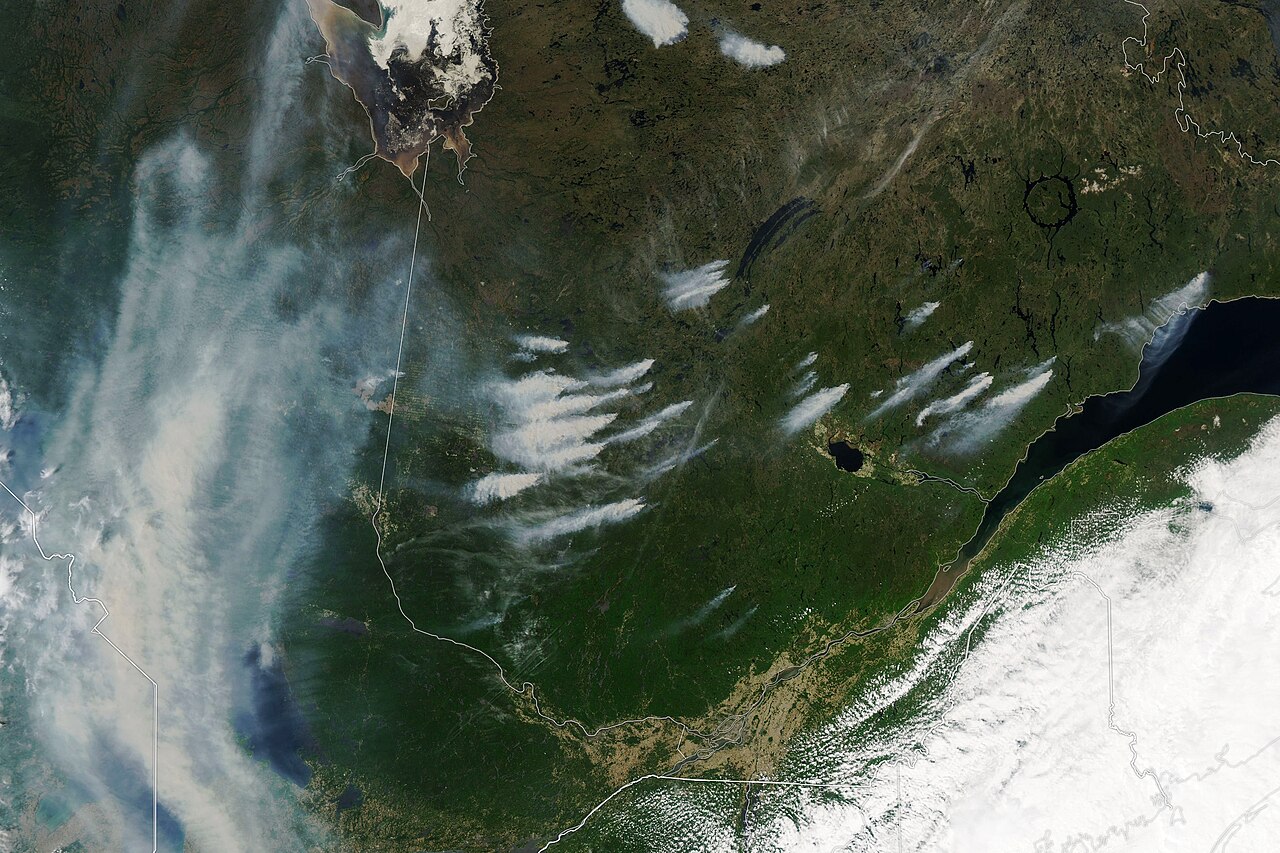

Fires release some of the carbon stored in trees, plants and soils back into the atmosphere. Globally, the quantities are enormous. The fifth version of the Global Fire Emissions Database estimates that landscape fires released an average of 3.4 billion tonnes of carbon a year between 2002 and 2022.
This includes fires in forests, grasslands and other vegetation, including agricultural burning, so its scope is broader than uncontrolled forest fires alone. Read the Global Fire Emissions Database study.
That figure measures carbon released during burning. The amount that remains in the atmosphere over the longer term also depends on whether the affected landscape recovers.
Carbon and carbon dioxide are different measurements
Carbon dioxide, or CO₂, contains carbon combined with oxygen. One tonne of carbon forms approximately 3.67 tonnes of CO₂ when fully converted into that gas. Fire smoke contains carbon in several forms, including CO₂ and methane. Throughout this article, emissions figures are expressed in tonnes of carbon.
What can a single fire season release?
The scale becomes easier to grasp through individual fire seasons. Researchers estimated that Canada’s wildfires released 647 million tonnes of carbon between May and September 2023, with an estimated range of 570–727 million tonnes. In five months, those fires released carbon on a scale comparable to the annual fossil-fuel emissions of some of the world’s largest economies. Read the study published in Nature.
Europe has also experienced exceptional seasons. In 2025, European wildfire emissions reached their highest annual level in the Copernicus Atmosphere Monitoring Service record, which began in 2003. Spain contributed around half of the European total. Across Europe, emissions were close to average in every month except August, showing how a short period of intense burning can dominate an entire year. See Copernicus’s 2025 wildfire assessment.
Why what burns matters
These totals depend heavily on what the flames consume. A hectare of dry grassland and a hectare of forest with deep, carbon-rich soils contain very different amounts of fuel. How much of that material actually burns also varies. Counting hectares alone cannot fully describe a fire’s carbon impact.
The March 2024–February 2025 fire season illustrates this. The State of Wildfires report found that:
| Global measure | Change from the report’s historical average |
|---|---|
| Area burned | 9% lower |
| Carbon released | 9% higher |
High-emission fires in South America and Canada helped produce this contrast: less land burned globally, yet more carbon was released.
How do scientists estimate the emissions?
Measuring those emissions requires more than photographing a smoke plume. Scientists combine satellite observations with information about vegetation and combustion. Copernicus, for example, measures the heat radiated by active fires, estimates how much material is being consumed, and uses factors derived from field and laboratory studies to calculate emissions. See how Copernicus estimates fire emissions.
The results improve as the observations and models improve. The 3.4-billion-tonne annual estimate from the fifth version of the Global Fire Emissions Database was 65% higher than its predecessor’s estimate for the same period. That revision reflects changes in the data and methods, including better accounting for burned area and fuel. It does not mean real-world emissions suddenly increased by 65%. Read the GFED5 research paper.
What happens after the fire?
Growing plants absorb CO₂ from the atmosphere and store its carbon. When vegetation returns after a fire, it can take up some of the carbon that was released. The speed and extent of that recovery depend on the ecosystem, the damage and conditions during regrowth.
Recovery can be slow. Discussing the severe 2014 fires in Canada’s Northwest Territories, a NASA scientist estimated that replacing the lost carbon stocks would take 75–100 years. That estimate applies to those forests; other landscapes recover at different rates. Read NASA’s explanation of fire and carbon recovery.
If forests are permanently cleared, peat burns, or repeated fires prevent vegetation from recovering, carbon losses can persist. This is why the emissions produced during a fire and its lasting contribution to atmospheric carbon are different quantities. Read the Global Fire Emissions Database’s carbon-cycle explanation.
What does this mean for fire monitoring?
For organisations managing forests, conservation areas or infrastructure, these findings give fire monitoring an additional significance. A damaging fire can affect both the carbon already stored in a landscape and its capacity to absorb carbon in the future.
Fire also has a natural role in many ecosystems, so management needs to reflect local ecological conditions. Where fires threaten people, assets or vulnerable habitats, earlier detection can support a quicker response. Its effectiveness depends on verification, access, weather and the resources available to act.
Sources & further reading
- Landscape fire emissions from the fifth version of the Global Fire Emissions Database (GFED5) van der Werf and colleagues, Scientific Data (2025); Wageningen University & Research record
- Carbon emissions from the 2023 Canadian wildfires Byrne and colleagues, Nature (2024)
- European State of the Climate 2025: Wildfires Copernicus Climate Change Service / ECMWF
- State of Wildfires 2024–2025 Kelley and colleagues, Earth System Science Data (2025)
- CAMS global biomass burning emissions based on fire radiative power (GFAS) Copernicus Atmosphere Monitoring Service / ECMWF
- GFED5 research paper: methods and comparison with the previous inventory van der Werf and colleagues, Scientific Data (2025); full paper via Wageningen University & Research
- Through Smoke and Fire, NASA Searches for Answers NASA Science
- GFED frequently asked questions: fire and climate change Global Fire Emissions Database
- Wildfires: fire ecology, carbon emissions and recovery NASA Science / Landsat
- Science & Tech Spotlight: Wildfire Detection Technologies US Government Accountability Office (2025)
NuraGaze provides wildfire early-warning software and monitoring systems. These statistics describe the cited regions, periods and datasets; they do not measure emissions avoided by a NuraGaze deployment.