Early detection
How does AI detect wildfire smoke?
Cameras provide the view. AI looks for smoke. Here’s how an image becomes an alert, and why human judgement still matters.
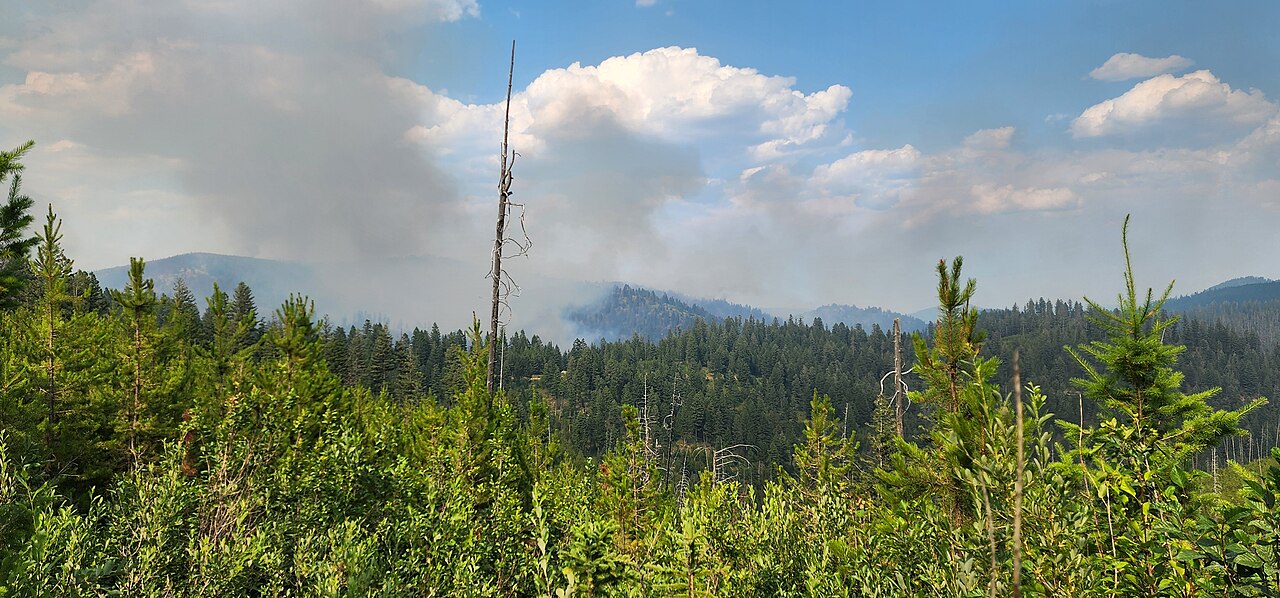

AI can detect wildfire smoke by recognising visual patterns in camera images. A trained model flags areas that resemble smoke, helping an operator decide where to look. The aim is to draw attention to a possible fire while there is still time to assess it and respond.
That sounds straightforward. In practice, a faint plume can look much like cloud or morning mist. Understanding how a system learns, and what happens after it raises an alert, helps explain both its promise and its limits.
Learning what smoke looks like
Training starts with examples. Researchers give a model images labelled to show whether smoke is present, sometimes marking its outline or location. Images without smoke matter too: they help the model learn which landscape features should not trigger an alert.
One published example is FIgLib, a collection of labelled wildfire camera images. The accompanying SmokeyNet model analyses successive images, combining information about appearance with changes over time. A developing plume offers clues that a single still image may miss.
The important test comes afterwards. Can the model recognise smoke from fires it has never seen? Splitting training and test data by fire, as the researchers did, helps avoid rewarding a model for recognising familiar scenes.
From an image to an alert
Once trained, a model examines new camera images. Some systems divide a large picture into smaller patches so a distant plume does not disappear when the whole image is shrunk. A 2020 study of remote wildfire cameras used this approach.
The model assigns a score to a possible detection. Software then decides whether it meets the rules for an alert. Those rules might consider repeated detections or filter out recurring distractions.
An operational account from the HPWREN camera network describes adjusting alert thresholds and using previous false alarms to improve training. This shows why the surrounding software and continuing evaluation matter alongside the model itself.
How the pieces fit together
From a view to a decision
- 01 / Observe
A camera captures the landscape.
- 02 / Analyse
A trained model looks for smoke.
- 03 / Flag
Alert rules identify an image to review.
- 04 / Verify
An operator assesses it and follows the response procedure.
A model score is a signal to investigate, not proof of a fire. Lowering the alert threshold can catch more possible smoke but also create more false alarms. Raising it can reduce interruptions while missing some fires.
Why it can make mistakes
There are two basic failures: flagging something that is not smoke, and overlooking smoke that is present. The SmokeyNet researchers describe cloud, haze and fog as difficult lookalikes. Very small or faint plumes are another challenge. Our guide to smoke, fog and dust explains why false alarms happen and how to assess them.
A camera also needs a useful view. A ridge can hide the source of a fire. Smoke must become visible within the camera’s coverage before an image-based system can recognise it. Installing software does not remove those physical limits.
Night-time capability deserves a separate question. Ordinary daylight imagery, near-infrared night vision and thermal imaging provide different information. ALERTCalifornia describes both near-infrared cameras and work on thermal infrared imaging. A claim about daytime smoke detection should not be taken as evidence of equivalent performance after dark.
What makes a warning useful?
Detection is only the beginning. In ALERTCalifornia’s AI-assisted workflow, trained watchstanders review potential incidents before confirming them. Human judgement connects an automated signal with an operational decision.
Information must also reach the right people. The US Government Accountability Office identifies remote communication and fire verification as practical challenges for detection technologies. A promising image is less useful if nobody receives it promptly or knows what to do next.
For a site manager, useful questions include how often false alerts occur, how quickly visible smoke is flagged and what happens when a camera goes offline. Ask for results from conditions resembling your own site, including difficult weather and lighting. Our guide to using existing security cameras for fire detection sets out six practical checks.
Our explainer on how fast a wildfire can spread shows why those minutes matter. Earlier information creates an opportunity to act; the response plan determines how that opportunity is used.
Sources & further reading
- FIgLib & SmokeyNet: Dataset and Deep Learning Model for Real-Time Wildland Fire Smoke Detection Dewangan and colleagues, Remote Sensing (2022)
- Preliminary Results from a Wildfire Detection System Using Deep Learning on Remote Camera Images Govil and colleagues, Remote Sensing (2020)
- Lessons learned from operating a public wildfire detection system Kinshuk Govil, Open Climate Tech; published by HPWREN (2021)
- Research & Technology ALERTCalifornia, UC San Diego
- Wildfire Detection Technologies US Government Accountability Office (2025)
NuraGaze provides wildfire early-warning software and monitoring systems. This explainer describes approaches in the cited research and operational networks; their results are not performance claims for NuraGaze products.