Fire science
How fast can a wildfire spread?
A fire can creep across the forest floor or race through dry grass. Here’s what controls its speed, and why a few minutes can make a difference.
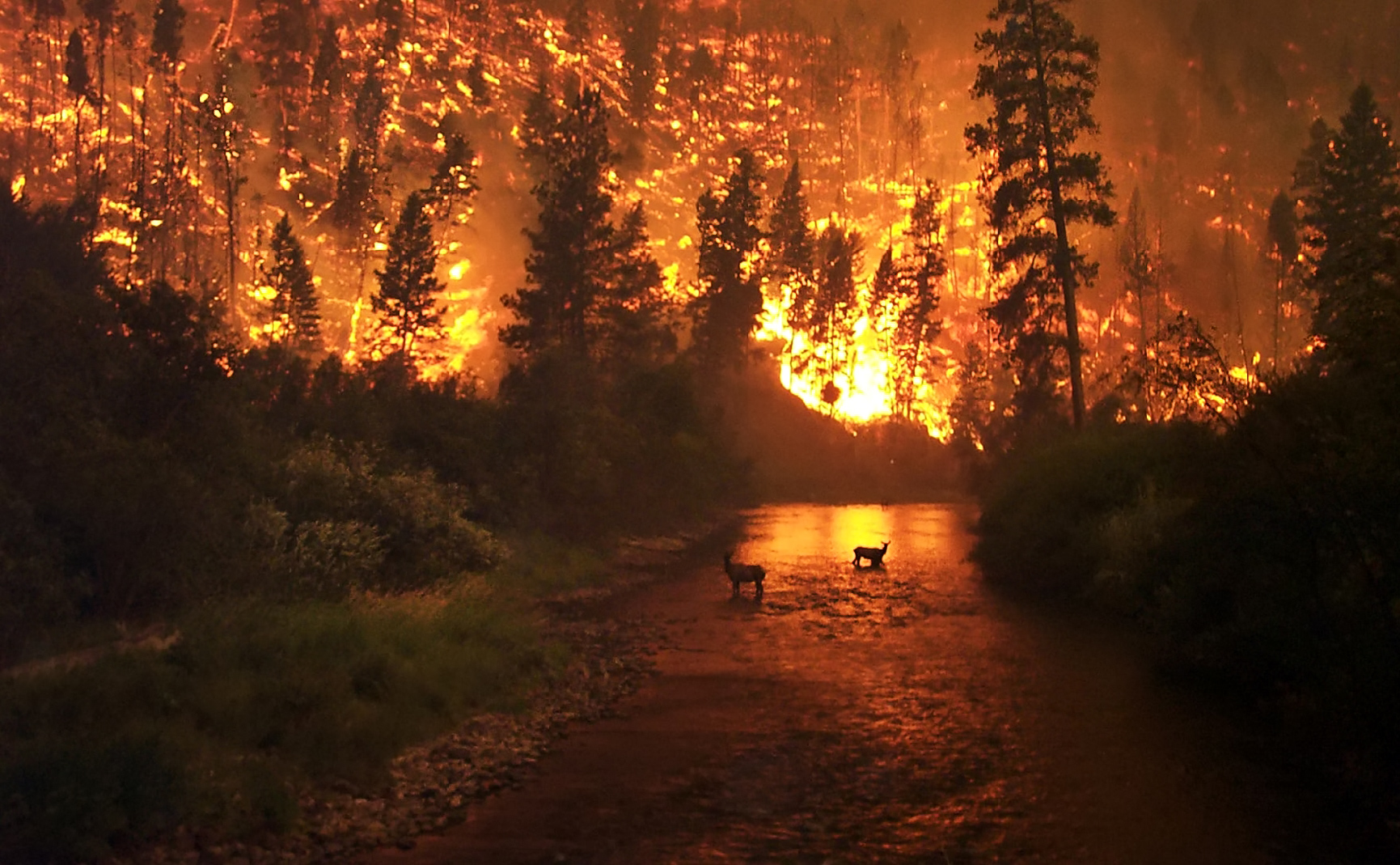

A wildfire can move slowly through forest litter or advance kilometres in an hour. Natural Resources Canada describes surface fires in grass, shrubs or logging debris reaching 12 kilometres per hour. That is 200 metres a minute. But no single number describes every fire, and the pace can change as conditions change.
For anyone responsible for a park, vineyard or stretch of infrastructure, the useful question is what could make a nearby fire accelerate. Understanding the factors behind its speed helps explain why early information matters.
How fast is fast?
The 12 km/h figure is an example, not a worldwide speed limit. In Australia, Victoria’s Country Fire Authority describes grassfires reaching 25 km/h in extreme conditions. These figures refer to particular vegetation and conditions; they are not predictions for a fire near you.
Scientists also distinguish the advancing edge from the whole fire. The fastest-moving part is called the head of the fire. Its sides and rear can move at different speeds. A report of forward spread therefore cannot, by itself, tell you how many hectares will burn.
To put one rate into perspective, imagine an advancing front holding a steady 12 km/h. It would travel one kilometre in five minutes. This is simple arithmetic: real fires accelerate, slow down, change direction and start new fires ahead.
Putting speed into perspective
At a steady 12 km/h
Distance travelled by the advancing front
| Time | Forward distance |
|---|---|
| 1 min | 200 m |
| 3 min | 600 m |
| 5 min | 1,000 m |
What changes the pace?
Three things shape fire behaviour: the vegetation available to burn, the weather and the shape of the land. They work together, so a change in one can alter what happens next.
Small, dry fuels catch quickly
Firefighters call combustible vegetation “fuel”. Dry grass, needles and small twigs heat up and ignite more readily than large logs. Oregon State University explains that fine fuels can dry out after a short spell of sunshine, even while larger pieces remain damp. A landscape does not need to look uniformly dry for its surface vegetation to carry fire.
Wind pushes heat into fresh vegetation
Wind can bend flames towards unburned plants, helping heat them before they ignite. It also carries burning fragments ahead. A change in direction can turn a fire’s long side into its new advancing front, suddenly putting a much wider area in its path. The Country Fire Authority illustrates why wind changes are especially dangerous.
Slopes bring the next fuel closer
Fire generally spreads faster uphill because vegetation above the flames is more easily preheated. Ontario’s fire behaviour guidance explains this effect. Hills and valleys also influence airflow. A speed measured on one part of a hillside may say little about what happens around the next ridge.
When fire jumps ahead
A wildfire does not always advance as one continuous edge. Rising hot air can lift burning pieces of bark, twigs and other material. Wind then carries them to fresh vegetation, where they can start separate “spot fires”.
These airborne firebrands help explain why the visible flames are only part of the picture. An area ahead of the main front may already contain new ignitions. Measuring the distance to that front alone can give a misleading impression of how soon a place could be affected.
Why earlier warning matters
Detection starts a sequence: someone must assess the signal, establish a location, alert the right people and organise a response. Each step takes time. Our article on why the first few minutes matter explains how earlier warning can help teams work through that sequence.
The US Government Accountability Office’s review of detection technologies describes how cameras, satellites and sensors may help speed up detection and response. It also identifies practical challenges, including transmitting information from remote areas and verifying potential fires.
An alert cannot guarantee containment. Weather, access and available crews still matter. For a site manager, the practical question is whether a detection can quickly become useful information: where the fire is, what has been seen and who needs to act.
During an incident, follow local emergency instructions. A general spread rate should never be used to calculate a safe time to wait.
Sources & further reading
- Fire behaviour Natural Resources Canada
- How bushfires behave Country Fire Authority, Victoria
- Fire behavior Oregon State University Extension
- Wildland fire behaviour Government of Ontario
- Wildfire Detection Technologies US Government Accountability Office
NuraGaze provides wildfire early-warning software and monitoring systems. This explainer draws on the independent sources above.